

 Torna indietro
  newsletter
 webradio
 replay


Although Clémence de Grandval (1828–1907) came from a privileged background, she had to struggle to establish herself as a composer. But now the time has come for her achievements to be acknowledged.
Cycle
Clémence de Grandval, an unconventional vicomtesse
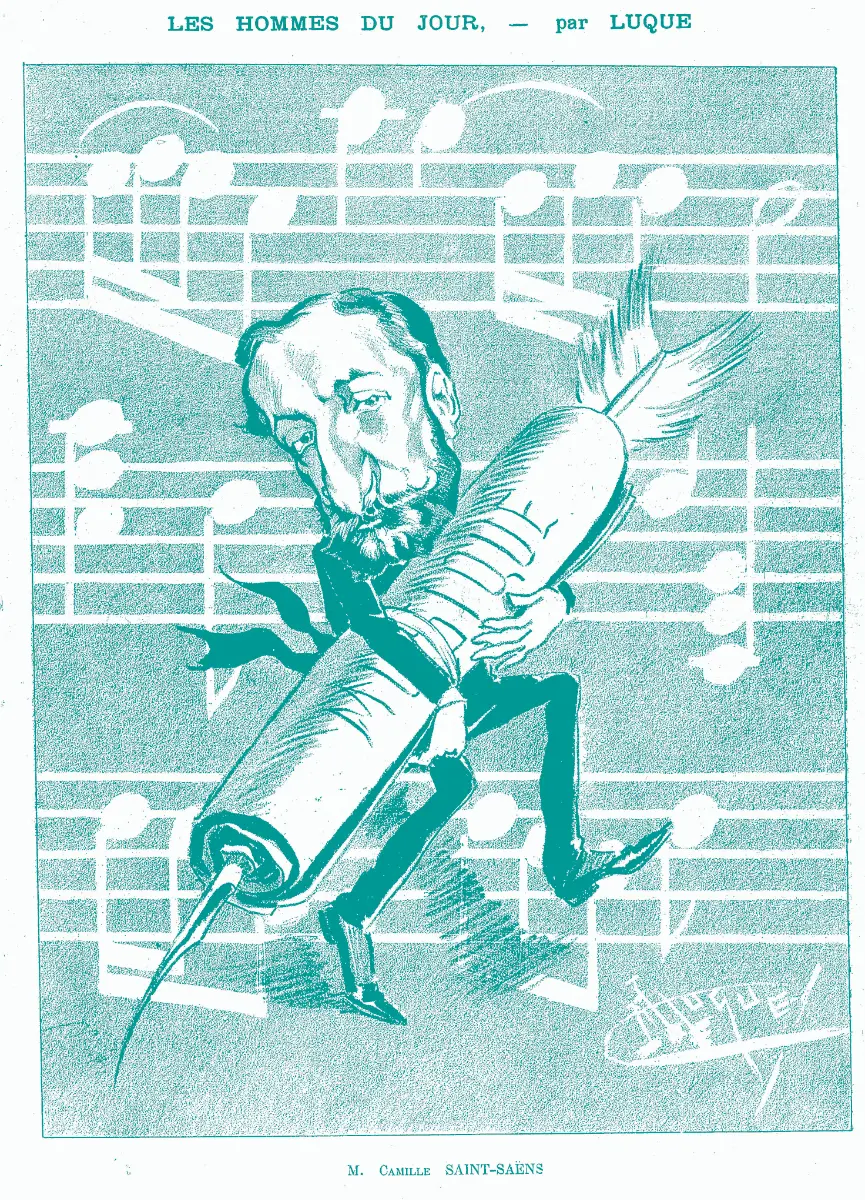
“All in all, one could not have done better than to have awarded this prize for the composition of a mélodie to Mme de Grandval, who on her own admission is devoted to the genre. Her mélodies with piano accompaniment are exquisite; they would certainly be famous were it not for the fact that their composer is seen by many as being irredeemably at fault, simply because she is a woman.”
Camille Saint-Saëns, on the Prix Rossini, February 1881.
Defying conventions
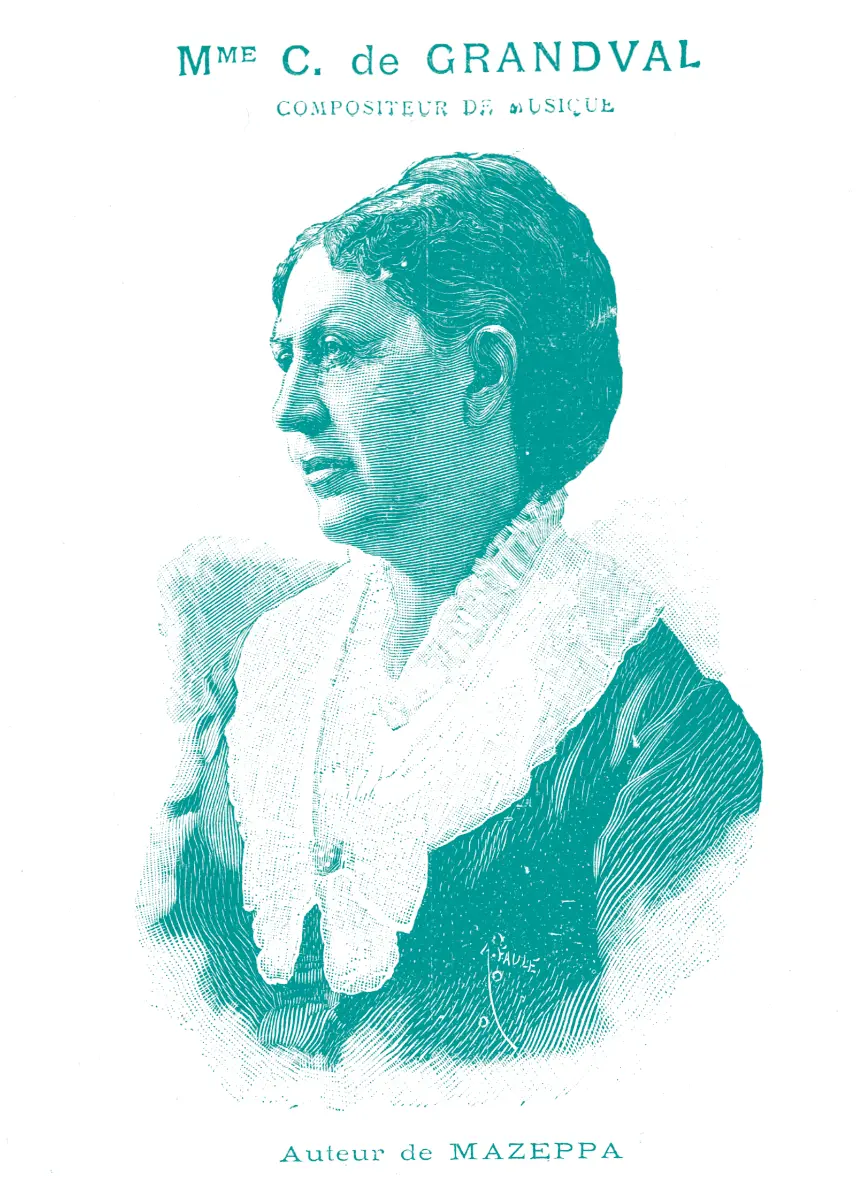
Several decades of research on the subject of women composers in the nineteenth century have thoroughly documented the hostile environment in which they found themselves. Generally confined to intimate or educational formats, they were excluded from the most prestigious musical establishments. Opera houses and concert societies rarely welcomed them. The Vicomtesse de Grandval had to face such obstacles, and as if that was not enough, she also had to contend with the restrictions imposed by her social position. As an aristocrat, she could not aspire to become a professional musician, which effectively placed her in the category of “amateurs”. How, then, could she be taken seriously? By approaching every aspect of her art with the utmost ambition.
Her musical upbringing
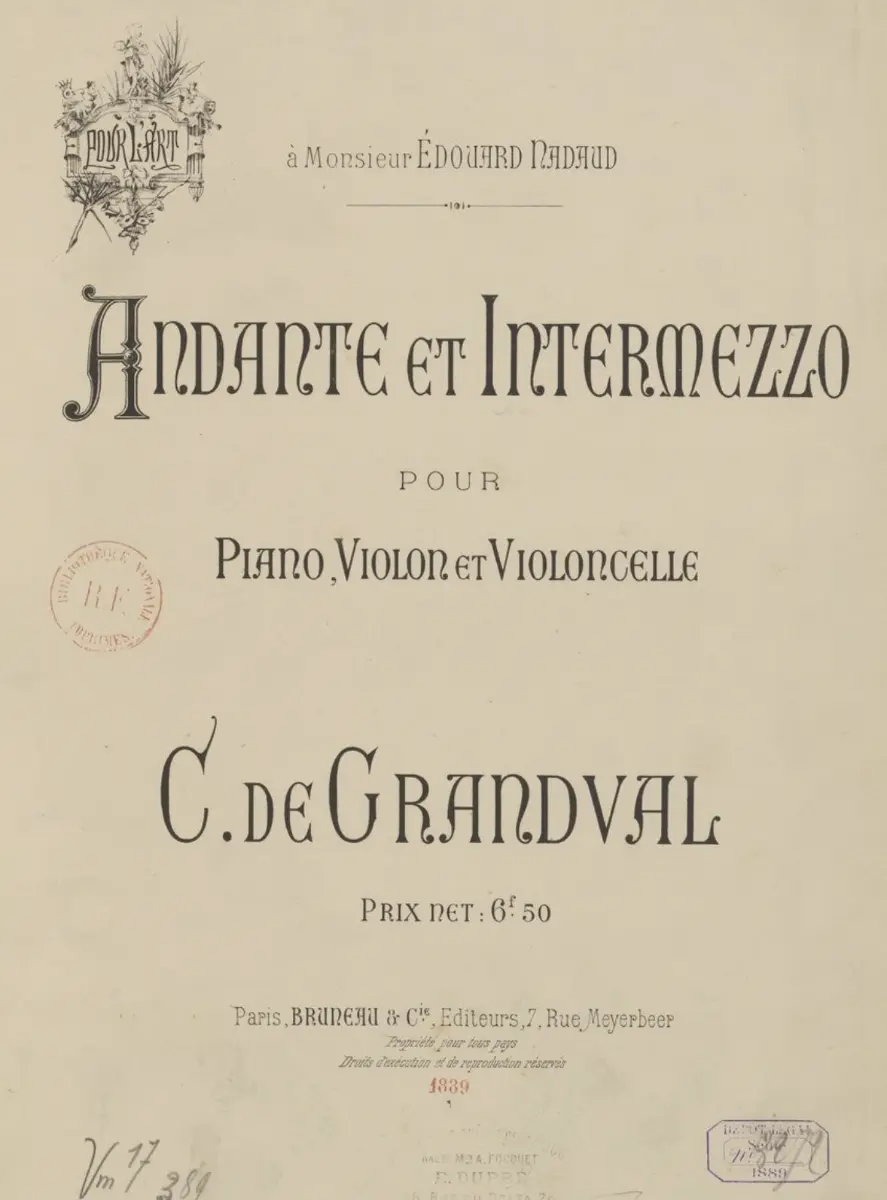
She was born Clémence de Reiset, the youngest of four children in an aristocratic family living in the Sarthe department of France (Pays de la Loire region). Her father was an amateur pianist and her mother an accomplished writer. From a young age, she was immersed in the arts through the cultural activities organised by her parents at their château. There she met, amongst others, the German composer Friedrich von Flotow, who taught her piano and composition, and Laure Cinti-Damoreau, who became her singing teacher. Frédéric Chopin was also a frequent visitor and remained a constant source of inspiration for her. From the mid-1840s onwards, the music press reported on her early compositions – “two delightful choruses composed by a young person from a distinguished family” (1845), followed by an “excellent trio for piano, violin and cello” (1849) – and also praised her talents as a singer, which she put to use in her own romances. Just a few days before her marriage to Charles-Grégoire de Grandval, in February 1851, the andante movement of her Symphony in C was premiered, with Hector Berlioz conducting. Contrary to the norm, her marriage did not put an end to her artistic pursuits. During the 1850s, she honed her compositional skills with Camille Saint-Saëns, who henceforth became her greatest advocate in musical circles.
Finding her place
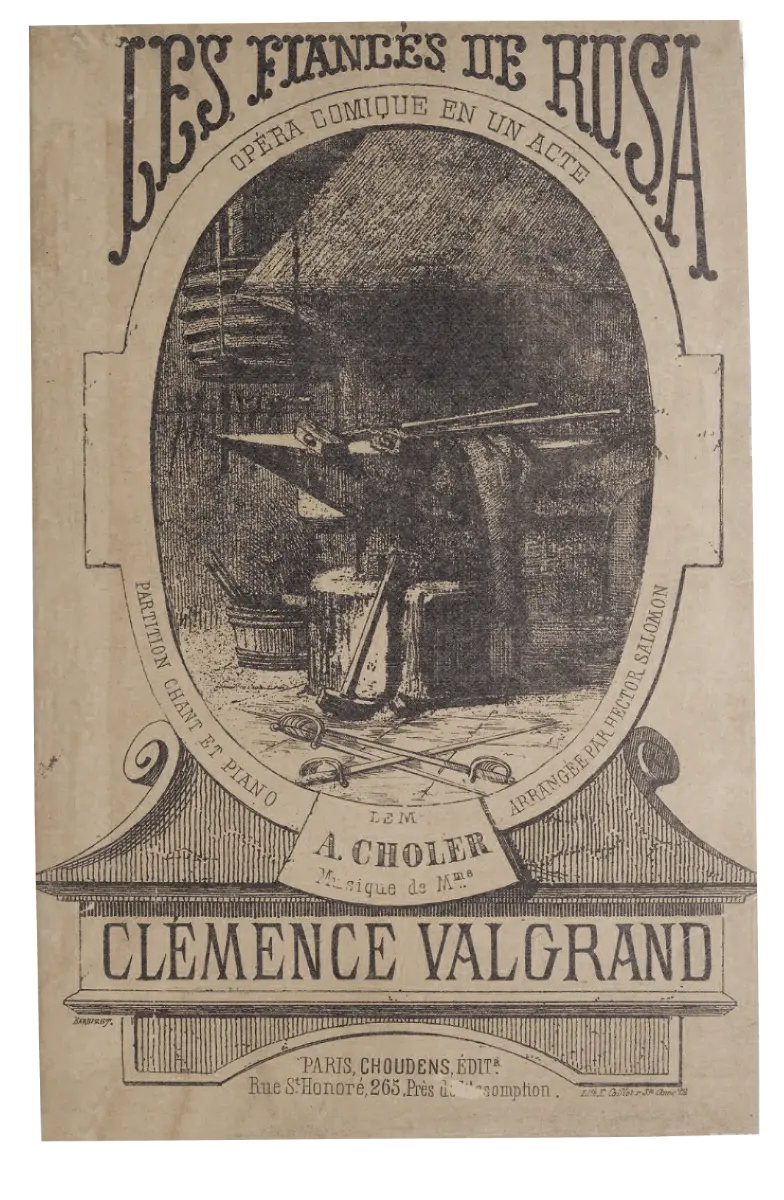
In 1849, the Société des Concerts du Conservatoire rejected her Symphony in C on the grounds that she was an “amateur” and that she could “afford to pay for her work to be performed”. Following the premiere of the andante, conducted by Berlioz, the piece reappeared in January 1853 in a concert presented by the Société Sainte-Cécile, prompting a similar remark in the weekly music journal Le Ménestrel: “Perhaps it would have been preferable if Madame de Grandval had had the generosity to step aside to make way for some talented artist of lesser means.” Was she, then, too wealthy for her work to be presented at public venues? Her early operatic attempts certainly suggest that she felt the need to conceal her identity in order to gain acceptance: she signed the score of Le Sou de Lise (premiered at the Bouffes-Parisiens in May 1860) as “Caroline Blangy” and that of Les Fiancés de Rosa (Théâtre-Lyrique, May 1863) as “Clémence Valgrand”. Music publishers did not share the same prejudices, however: they welcomed the Vicomtesse’s works from 1850 onwards. Numerous vocal pieces appear in their catalogues alongside ambitious chamber works, such as the Grande sonate for piano and violin (1851) and her Piano Trio no. 2 (1853).
The avant-garde
By the end of the Second Empire, Clémence de Grandval had demonstrated the quality of her compositional skills in most musical genres, including sacred works and opera. Thanks to her excellent reputation and her friendship with Camille Saint-Saëns, she naturally found herself at the heart of the artistic avant-garde that emerged after the Paris Commune. The founding of the Société nationale de musique in 1871 proved a godsend for an artist whose presence was frowned upon at public concerts. The semi-private nature of its performances meant that she could express herself freely. The SNM’s fourth concert featured her Suite for Flute and Piano, and subsequent programmes included her mélodies, settings of parts of the Mass, her Stabat Mater, and a Serenade for orchestra. She also performed at those concerts, singing not only her own mélodies but also, for example, La Mort d’Ophélie by Camille Saint-Saëns in 1873. From then on, the concert societies began to take notice of her. In 1874, Jules Pasdeloup premiered her Esquisses symphoniques. She also received recognition from her peers at that time: in 1880, the Académie des Beaux-Arts awarded her the inaugural Prix Rossini for her oratorio La Fille de Jaïre, and in 1890 she received the Prix Chartier for the whole of her chamber output.
The glass ceiling
Aware of her contemporaries’ reluctance to promote the work of women composers, Clémence de Granval climbed the ladder to operatic fame very gradually throughout her career. She made her début in opérette theatres, with La Comtesse Éva at Les Bouffes-Parisiens, and then in Baden-Baden. In 1863, she secured a run at the Théâtre Lyrique with the one-act opéra-comique Les Fiancés de Rosa, and in 1868 she succeeded in having another one-act composition, La Pénitente, staged at the Opéra Comique. In 1869, her three-act opera Piccolino was performed at the Théâtre-Italien. The next logical step – meaning consecration – would have been a production at the Paris Opéra. With that in mind, she composed Mazeppa, a five-act grand opéra. However, the prestigious institution categorically refused the work. Ultimately, it was the Grand-Théâtre in Bordeaux that gave it a triumphant reception in 1892, enabling it to enjoy a successful run on several European stages... but not at the Paris Opéra! After that scandalous injustice — which one might hope will be rectified in the twenty-first century — the Opéra allowed Clémence de Grandval to present La Montagne noire in 1895. It was the first work by a woman to be performed at the institution since Louise Bertin’s La Esmeralda in 1836.
Several decades of research on the subject of women composers in the nineteenth century have thoroughly documented the hostile environment in which they found themselves. Generally confined to intimate or educational formats, they were excluded from the most prestigious musical establishments. Opera houses and concert societies rarely welcomed them. The Vicomtesse de Grandval had to face such obstacles, and as if that was not enough, she also had to contend with the restrictions imposed by her social position. As an aristocrat, she could not aspire to become a professional musician, which effectively placed her in the category of “amateurs”. How, then, could she be taken seriously? By approaching every aspect of her art with the utmost ambition.
Her musical upbringing
She was born Clémence de Reiset, the youngest of four children in an aristocratic family living in the Sarthe department of France (Pays de la Loire region). Her father was an amateur pianist and her mother an accomplished writer. From a young age, she was immersed in the arts through the cultural activities organised by her parents at their château. There she met, amongst others, the German composer Friedrich von Flotow, who taught her piano and composition, and Laure Cinti-Damoreau, who became her singing teacher. Frédéric Chopin was also a frequent visitor and remained a constant source of inspiration for her. From the mid-1840s onwards, the music press reported on her early compositions – “two delightful choruses composed by a young person from a distinguished family” (1845), followed by an “excellent trio for piano, violin and cello” (1849) – and also praised her talents as a singer, which she put to use in her own romances. Just a few days before her marriage to Charles-Grégoire de Grandval, in February 1851, the andante movement of her Symphony in C was premiered, with Hector Berlioz conducting. Contrary to the norm, her marriage did not put an end to her artistic pursuits. During the 1850s, she honed her compositional skills with Camille Saint-Saëns, who henceforth became her greatest advocate in musical circles.
Finding her place
In 1849, the Société des Concerts du Conservatoire rejected her Symphony in C on the grounds that she was an “amateur” and that she could “afford to pay for her work to be performed”. Following the premiere of the andante, conducted by Berlioz, the piece reappeared in January 1853 in a concert presented by the Société Sainte-Cécile, prompting a similar remark in the weekly music journal Le Ménestrel: “Perhaps it would have been preferable if Madame de Grandval had had the generosity to step aside to make way for some talented artist of lesser means.” Was she, then, too wealthy for her work to be presented at public venues? Her early operatic attempts certainly suggest that she felt the need to conceal her identity in order to gain acceptance: she signed the score of Le Sou de Lise (premiered at the Bouffes-Parisiens in May 1860) as “Caroline Blangy” and that of Les Fiancés de Rosa (Théâtre-Lyrique, May 1863) as “Clémence Valgrand”. Music publishers did not share the same prejudices, however: they welcomed the Vicomtesse’s works from 1850 onwards. Numerous vocal pieces appear in their catalogues alongside ambitious chamber works, such as the Grande sonate for piano and violin (1851) and her Piano Trio no. 2 (1853).
The avant-garde
By the end of the Second Empire, Clémence de Grandval had demonstrated the quality of her compositional skills in most musical genres, including sacred works and opera. Thanks to her excellent reputation and her friendship with Camille Saint-Saëns, she naturally found herself at the heart of the artistic avant-garde that emerged after the Paris Commune. The founding of the Société nationale de musique in 1871 proved a godsend for an artist whose presence was frowned upon at public concerts. The semi-private nature of its performances meant that she could express herself freely. The SNM’s fourth concert featured her Suite for Flute and Piano, and subsequent programmes included her mélodies, settings of parts of the Mass, her Stabat Mater, and a Serenade for orchestra. She also performed at those concerts, singing not only her own mélodies but also, for example, La Mort d’Ophélie by Camille Saint-Saëns in 1873. From then on, the concert societies began to take notice of her. In 1874, Jules Pasdeloup premiered her Esquisses symphoniques. She also received recognition from her peers at that time: in 1880, the Académie des Beaux-Arts awarded her the inaugural Prix Rossini for her oratorio La Fille de Jaïre, and in 1890 she received the Prix Chartier for the whole of her chamber output.
The glass ceiling
Aware of her contemporaries’ reluctance to promote the work of women composers, Clémence de Granval climbed the ladder to operatic fame very gradually throughout her career. She made her début in opérette theatres, with La Comtesse Éva at Les Bouffes-Parisiens, and then in Baden-Baden. In 1863, she secured a run at the Théâtre Lyrique with the one-act opéra-comique Les Fiancés de Rosa, and in 1868 she succeeded in having another one-act composition, La Pénitente, staged at the Opéra Comique. In 1869, her three-act opera Piccolino was performed at the Théâtre-Italien. The next logical step – meaning consecration – would have been a production at the Paris Opéra. With that in mind, she composed Mazeppa, a five-act grand opéra. However, the prestigious institution categorically refused the work. Ultimately, it was the Grand-Théâtre in Bordeaux that gave it a triumphant reception in 1892, enabling it to enjoy a successful run on several European stages... but not at the Paris Opéra! After that scandalous injustice — which one might hope will be rectified in the twenty-first century — the Opéra allowed Clémence de Grandval to present La Montagne noire in 1895. It was the first work by a woman to be performed at the institution since Louise Bertin’s La Esmeralda in 1836.